We finally started looking at real bioorganic chemistry on Wednesday and Friday. On Wednesday we looked at lipid metabolism and learned how biological systems use the catalytic triad as a way of manufacturing hydroxide for a reaction, but keeping [hydroxide] equal to (essentially) zero. In this way, fatty acid esters are converted to alcohol and carboxylic acid. Here, it is all about the electron flow.....
We also saw how to go backwards from acid and alcohol to fatty acid ester. This process a little more complicated and required that we use acetyl-CoA to create thioesters and ATP to create acyl phosphates from carboxylic acids.
Friday's focus was on the conversion of glycerol to dihydroxyacetone phosphate. Several important points came up in this one: you don't need to limit pro-R and pro-S designations to hydrogens (we saw how to label the CH2 groups in glycerol), the ATP-mediated phosphorylation is used again (this time on an alcohol instead of an acid), and the use of the NAD+/NADH system to mediate redox chemistry. This last part was the hardest, requiring that we understand how NADH acts as a stereospecific source of hydride and how NAD+ acts as a hydride acceptor in what is essentially an elimination of dihydrogen from across a C=O bond.

About Me
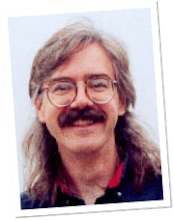
- DCChem
- I am Professor and Alfred Victor DuPont Chair in Chemistry at Dickinson College. My professional interests gravitate towards organotransitionmetal synthetic methodology, green chemistry, and the development of undergraduate organic chemistry labs.
No comments:
Post a Comment